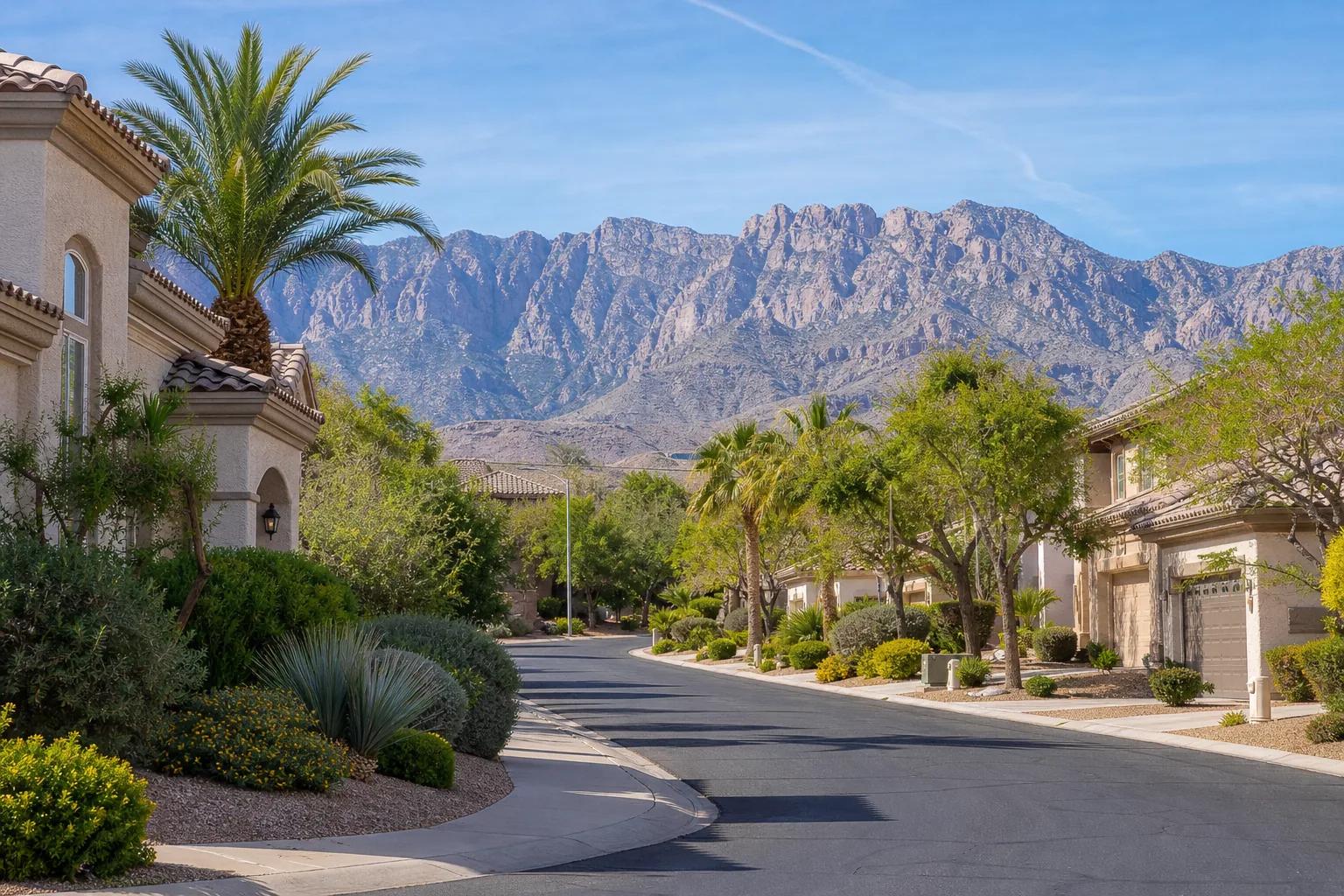
Yes, neighbors affect property value: a bad neighbor situation, from a neglected yard to a nearby foreclosure, can lower home values by roughly 5% to 10%, and the closer the problem house sits to your home, the bigger the impact.
We are The Scofield Group, an independent Las Vegas Valley real estate brokerage led by broker-owner Kirby Scofield, with 40+ advisors across Las Vegas, Henderson, Summerlin and North Las Vegas. Buyers and appraisers judge the whole street, so here is what carries weight and what you can change.
When we price a home, nearby sales weigh most, then neighbor property condition, then foreclosures, then noise and disputes. Appraisers lean on numbers. Buyers lean on what they see and hear at the house.
| Factor | Who weighs it most | Typical impact | What you can control |
|---|---|---|---|
| Nearby sales (comps) | Appraisers | Sets the starting value | Pricing, timing |
| Neighbor property condition | Buyers and appraisers | Up to 5% to 10% | Talk, HOA, code enforcement |
| Vacant or foreclosed homes nearby | Appraisers and buyers | About 0.9% to 1.3% per foreclosure | Reporting, patience |
| Noise and nuisance | Buyers | 5% to 10% in chronic cases | Barriers, soundproofing, reporting |
| Disputes with neighbors | Buyers | Varies by situation | Resolve before you sell |
Start with that top row, since what similar homes nearby sold for anchors the value of your home. An appraiser pulls those comparable sales first, so a neighbor's house that sells high lifts the benchmark for your home, and a distressed sale next door pulls it down.
Appraisers call outside drags on value external obsolescence. That is one of the three types of depreciation an appraiser may consider.
What we can do together:
Comps are the appraiser's view. Neighbor property condition is what buyers notice first, before they reach your door. Overgrown weeds, peeling paint or trash in the yard signal a declining street, and appraisal experts say an unkept nearby property can knock 5% to 10% off a sale price.
In a desert yard of rock and gravel, neglect looks like weeds in the stone and piled tumbleweeds. The closer that house sits, the bigger the impact, and the more homes with the same issues, the more the whole neighborhood feels it.
Upkeep spreads both ways, too. Well-kept or freshly remodeled neighboring homes lift the perceived quality of the entire street.
What works, in order:
Keep a paper trail of every neighbor talk and HOA report.
That record matters even more when the house next door goes quiet, because a nearby foreclosure can hurt home values more than a messy lawn. Vacant homes can attract pests, squatters and blight. Research has tied each nearby foreclosure to roughly a 0.9% to 1% drop, homes within 300 to 500 feet of a foreclosure saw about a 1.3% drop in one study, and another put the average decline at $7,200 for every nearby home.
The impact is often temporary, which is why timing matters. Once the lender sells the house to a new owner, the drag on nearby property values eases. In a condo, neighbors who stop paying fees can weigh on every unit.
If you can wait for a nearby foreclosure to resell, it can be worth real money.
An empty house is at least quiet. The opposite problem, chronic noise and nuisance behavior, can lower nearby home values by 5% to 10%. Case in point: buyers tend to notice loud parties, barking dogs or an unpermitted business when they come back at night.
Many HOA guidelines limit how many cars sit on a property, so parking issues go to the HOA first. Zoning violations and unpermitted structures create liabilities for adjacent owners.
For neighbor noise you cannot stop:
If months of hedges and reports change nothing, a dispute with the neighbor is where general advice stops. Courts give health and safety hazards higher priority than an unsightly yard. And suing a neighbor for lowering your property value is hard and slow.
Whether you must tell potential buyers about a neighbor dispute is a legal question. Talk to a Nevada real estate attorney before you list, and settle the issue first if you can.
Once a dispute is settled, or clearly won't be, pricing and presentation do the work. Exterior staging can draw attention to your home's strengths, and a fair price based on the real comps keeps the house from sitting on the market.
Drive your street at different times of day the way buyers will, and fix or block what you can before the first showing.
We pull the nearby sales and help you decide what to fix, what to block and how to price your home.
Yes. Poor upkeep, chronic noise, a nearby foreclosure or a low distress sale next door can all lower your home value.
Appraisal experts put the impact of a bad neighbor at roughly 5% to 10%, and more in extreme cases.
Sometimes, through a nuisance claim, but it is difficult. Talk to a Nevada real estate attorney about your situation.
It can, by roughly 1% per nearby foreclosure in the research, and the effect fades once a new owner buys the home.
Call The Scofield Group at (702) 766-3795, and we will talk through your street and pricing before you list.
Call (702) 766-3795