

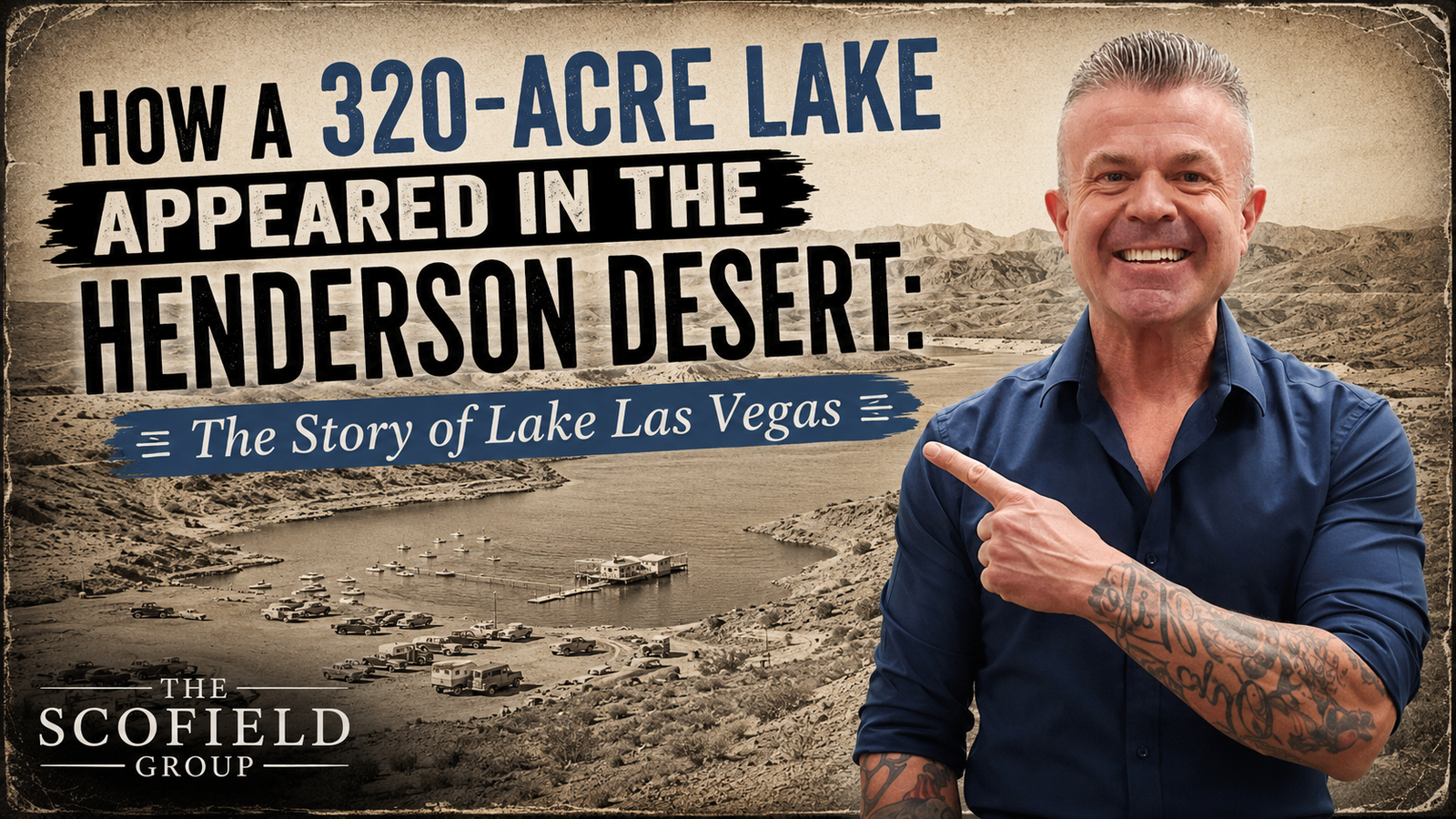
How a 320-Acre Lake Appeared in the Henderson Desert: The Story of Lake Las Vegas
In 1991, a developer named Ronald Boeddeker looked at a stretch of scrub and caliche east of Henderson — bone-dry Mojave, Las Vegas Wash running through it — and decided to build a lake.
Not a pond. Not a retention basin. A 320-acre reservoir with a floating pedestrian bridge, a Moroccan-inspired casino hotel, Italian lakefront cobblestones, and the kind of resort architecture you'd expect to find on Lake Como. In Nevada. In the desert. Roughly 17 miles from the Strip.
That vision became Lake Las Vegas — one of the most ambitious, most troubled, and ultimately most resilient luxury communities in the American Southwest. The story of how a lake appeared in the Henderson desert is, like most Las Vegas stories, equal parts audacity and recklessness.
The Engineering Behind the Dream
The lake itself isn't magic — it's civil engineering at scale. Las Vegas Wash, a natural drainage channel that carries water east toward Lake Mead, was dammed to create the reservoir. The dam is earth-filled, about 165 feet high, and the resulting lake covers roughly 320 acres with up to 38 feet of depth at its deepest point.
The water is non-potable — it's not connected to the valley's drinking supply — and the whole system sits within a private community. Evaporation in the Mojave is relentless (the valley averages fewer than 4 inches of rain a year), so maintaining water levels requires active management. It's one of the more dramatic examples in the valley of humans simply refusing to accept what the desert offers.
Construction on the surrounding community began in earnest through the mid-1990s under the Lake at Las Vegas Joint Venture, led by Transcontinental Properties. The pitch was straightforward in its absurdity: a Mediterranean resort destination built around a man-made lake in the Mojave, with luxury residential neighborhoods, world-class golf, and hotel properties that would attract both tourists and permanent residents.
Remarkably, it worked — at least for a while.
The Boom, the Hotels, and the Crash
By the early 2000s, Lake Las Vegas had two operating resort hotels: the Hyatt Regency Lake Las Vegas and the MonteLago Village Resort (which operated as a Loews property). The MonteLago Village retail and dining district — styled after a European lakeside village — drew visitors from across the valley. Golf courses designed by Jack Nicklaus and Tom Weiskopf gave it legitimate resort credibility. Residential enclaves with names like Mantova, Venezia, and Caliza sold custom and semi-custom homes at prices that turned heads even by Las Vegas standards.
At its peak, Lake Las Vegas was genuinely unlike anything else in the Southwest.
Then 2008 happened.
The Lake Las Vegas Joint Venture filed for bankruptcy in May 2008 — one of the earliest and most visible casualties of the real estate collapse in a metro that would go on to record some of the worst foreclosure rates in the country. The MonteLago hotel closed. Retail storefronts went dark. Partially built neighborhoods sat unfinished. The community that had been marketed as the pinnacle of desert luxury became a cautionary tale about overleveraged ambition.
For a few years, it was genuinely eerie — a cobblestone promenade with shuttered shops, a lake with no one on it.
The Comeback and What Lake Las Vegas Is Today
Recovery came slowly, then all at once. New ownership groups acquired the distressed assets and began reinvesting. The Westin Lake Las Vegas Resort & Spa — which had operated as the Hyatt — continued running and stabilized the hospitality side. The residential neighborhoods attracted buyers who recognized that the underlying asset (an actual lake, resort infrastructure, mountain views) hadn't gone anywhere.
Today, Lake Las Vegas operates as one of the valley's most distinctive luxury enclaves. The Westin Lake Las Vegas anchors the hospitality side. MonteLago Village has rebuilt its dining and retail presence. Two championship golf courses — The Falls Golf Club and Reflection Bay — remain operating. Residential properties range from attached villas to substantial custom estates, many with direct lake frontage or dramatic views of the McCullough Range.
For Las Vegas valley residents, Lake Las Vegas occupies a specific psychological space: it's the place you drive friends visiting from out of state when you want to prove the valley contains more than casinos and suburbs. The floating bridge. The actual lake. The gondola that no one entirely expects to be real.
Why It Matters Today
The story of Lake Las Vegas is a compressed version of the broader Las Vegas real estate story: visionary development, extraordinary growth, catastrophic collapse, patient recovery. The community today is genuinely stable — the infrastructure is paid for, the amenities are real, and the residential market has benefited from the same forces driving luxury demand across Henderson and the greater valley.
For buyers interested in the Henderson luxury market, Lake Las Vegas offers something genuinely uncommon in desert living: water as a permanent feature of the landscape, not just a resort amenity. Homes along the lake trade on that scarcity. The HOA structure is active and the CC&Rs reflect a community built around maintaining a specific aesthetic — something worth understanding before purchasing.
Kirby Scofield has tracked this market through the boom, the bankruptcy, and everything since. If you're curious about what's available around the lake, he knows it well.
Frequently Asked Questions
Is Lake Las Vegas a real lake or a reservoir?
It's a man-made reservoir created by damming Las Vegas Wash, a natural drainage channel. The dam is earth-filled and approximately 165 feet high, creating a roughly 320-acre body of water. The water is non-potable and managed privately within the community.
What happened to Lake Las Vegas during the 2008 financial crisis?
The Lake at Las Vegas Joint Venture filed for bankruptcy in May 2008, making it one of the earliest high-profile real estate casualties of the financial crisis in Nevada. Multiple hotels and retail properties closed or went dark. The community was subsequently acquired by new ownership groups and has since recovered as a functioning luxury residential and resort destination.
How far is Lake Las Vegas from the Las Vegas Strip?
Lake Las Vegas is approximately 17 miles east of the Strip, located in Henderson near the Lake Mead National Recreation Area. Drive time varies by traffic but typically runs 25–35 minutes via Lake Mead Parkway.