

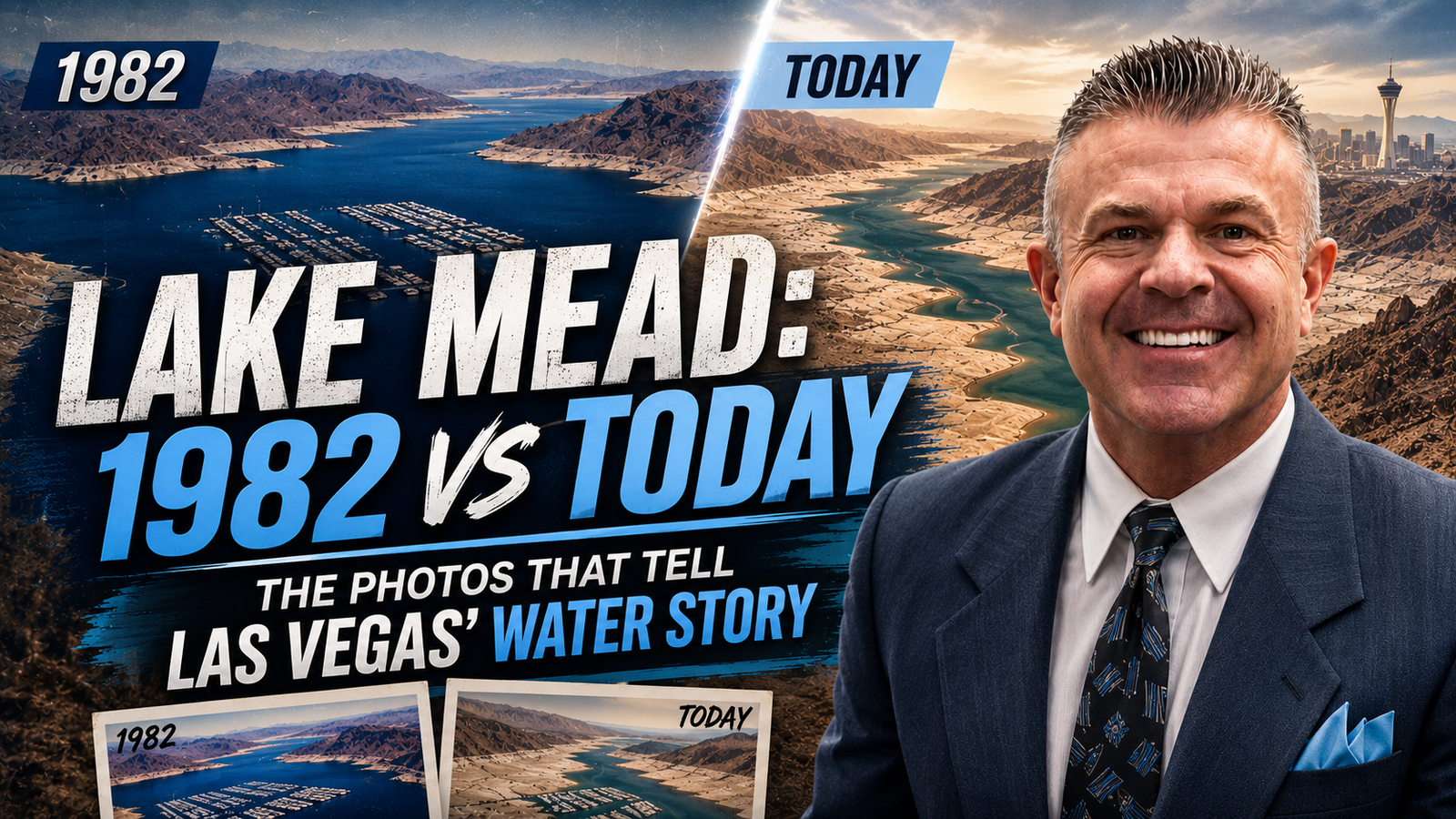
Lake Mead: 1982 vs Today — The Photos That Tell Las Vegas's Water Story
In 1982, Lake Mead sat at roughly 1,225 feet above sea level — brimming, blue, and almost cinematic against the Mojave desert. Speedboats idled in coves that, two decades later, would be dry cracked earth. The pale calcium carbonate stripe now etched into the red sandstone cliffs above the waterline — what everyone calls the "bathtub ring" — didn't exist yet. It would take a twenty-year drought, a population explosion, and a crisis-level standoff over the Colorado River to carve it there.
Lake Mead: 1982 vs Today — The Photos That Tell Las Vegas's Water Story isn't just a dramatic visual comparison. It's the origin story of why Las Vegas became the most water-efficient city of its size in the United States.
What the Bathtub Ring Is Actually Telling You
The white band you see in every aerial photo of Lake Mead isn't algae or mineral staining from the current waterline. It's the ghost of where the water used to be — calcium carbonate and other minerals deposited on the canyon walls over decades of high water, then left exposed as the reservoir dropped.
At its worst, in July 2022, the lake sat at approximately 1,040 feet — its lowest recorded level since Hoover Dam first filled the reservoir in the 1930s. The bathtub ring stretched nearly 180 vertical feet above the surface. To put that in concrete terms: that's a 17-story building of missing water.
In 1983, the lake was so full it actually threatened to overtop Hoover Dam's spillways — water managers had to open emergency outlets for the first time in history. The before-and-after is almost incomprehensible when you stand at the Boulder Beach overlook and trace the old waterline with your eyes.
The Southern Nevada Water Authority (SNWA) estimates that between 2000 and 2022, the Las Vegas Valley's share of the Colorado River shrank by roughly 30 percent on paper — while the metro's population grew from 1.4 million to more than 2.2 million people.
How Las Vegas Responded: The Strictest Conservation Rules in the Southwest
The short version: Las Vegas made a decision that most Sun Belt cities haven't — it chose to get radically smaller in its water footprint rather than gamble on future supply.
The most visible result is the grass. Starting in 2003, SNWA began paying homeowners to rip out thirsty Kentucky bluegrass lawns and replace them with desert-adapted landscaping — xeriscaping. The program eventually paid out more than $200 million and removed over 200 million square feet of turf valley-wide. If you bought a home in Summerlin or Henderson in the last decade and noticed that most front yards are rock, gravel, and drought-tolerant plants rather than green grass, that program is why.
Then in January 2027 — actually ahead of schedule — a state law takes full effect banning ornamental grass in common areas across Southern Nevada. The Las Vegas Strip's iconic fountains are largely recirculated water, but the median strips and office-park lawns that once guzzled millions of gallons are almost entirely gone.
Perhaps the most ingenious part of the conservation strategy is one most residents don't think about: water recycling. Every drop of water used indoors in Las Vegas — every shower, every hotel laundry load, every casino kitchen — is treated and returned to Lake Mead via the Las Vegas Wash. Because of this return-flow credit system, the valley can actually use more than its nominal Colorado River allocation without drawing down the lake further. It's one reason Las Vegas hotels can keep those massive pools running guilt-free.
The Bureau of Reclamation projected that Lake Mead's water level would dip roughly 15 feet by late July 2024, but then recover to approximately 1,163 feet by year's end — a modest but meaningful rebound from the 2022 crisis lows, aided by a stronger-than-average snowpack in the Rockies and the conservation gains already locked in.
Why It Matters Today — For Anyone Living Here
Water is quietly one of the biggest long-term variables in Las Vegas real estate and homeownership. Not in the way a buyer from the Pacific Northwest might fear — Southern Nevada has a legally secured water supply and infrastructure that coastal cities lack — but it shapes daily life, landscaping choices, HOA rules, and even new-home design in ways worth understanding.
If you're buying a home anywhere from Downtown Las Vegas to the outer edges of the valley, here's what the Lake Mead story means practically:
• **HOA landscaping rules have changed.** Many community CC&Rs written in the 1990s required green grass. Most have been updated or overridden by state law. Ask to see current rules before you buy.
• **Water bills are relatively low** compared to coastal metros — but tiered pricing means overwatering gets expensive fast.
• **New construction** in master-planned communities is designed around desert landscaping from the start. Older neighborhoods require more retrofitting.
• **Long-term supply is more stable than the headlines suggest.** Las Vegas has invested more in water recycling infrastructure than almost any comparable city. The 1982-to-2022 drop is real history; the conservation response is also real.
The bathtub ring on those canyon walls is a record of decades of drought, growth, and hard choices. It's also — if you squint at the most recent data — very slightly smaller than it was two years ago.
Frequently Asked Questions
What caused Lake Mead's water level to drop so dramatically from 1982 to today?
The decline is the result of two overlapping forces: a prolonged drought across the Colorado River Basin that began around 2000, and decades of over-allocation — seven states, two countries, and dozens of tribes were all legally entitled to more water than the river reliably produces in dry years. Las Vegas's population growth added demand pressure on the Nevada side, though the valley has since cut its per-capita water use by more than 40 percent.
Does the bathtub ring on Lake Mead mean Las Vegas is running out of water?
Not in the near term, and the situation has improved since the 2022 crisis low. The Southern Nevada Water Authority has invested heavily in indoor water recycling, turf removal, and supply diversification. The ring marks historical high-water levels, not imminent shortage — but it is a permanent visual reminder of why conservation rules here are the strictest in the Southwest.
How does Lake Mead's water level affect homeowners in Las Vegas?
Most directly through landscaping regulations — state law now restricts ornamental grass in commercial and common areas, and HOA rules in most communities require drought-tolerant landscaping. Water rates use a tiered structure that rewards conservation. For buyers, it's worth asking about a property's irrigation setup and whether the landscaping is already drought-adapted, since retrofitting can cost several thousand dollars.