

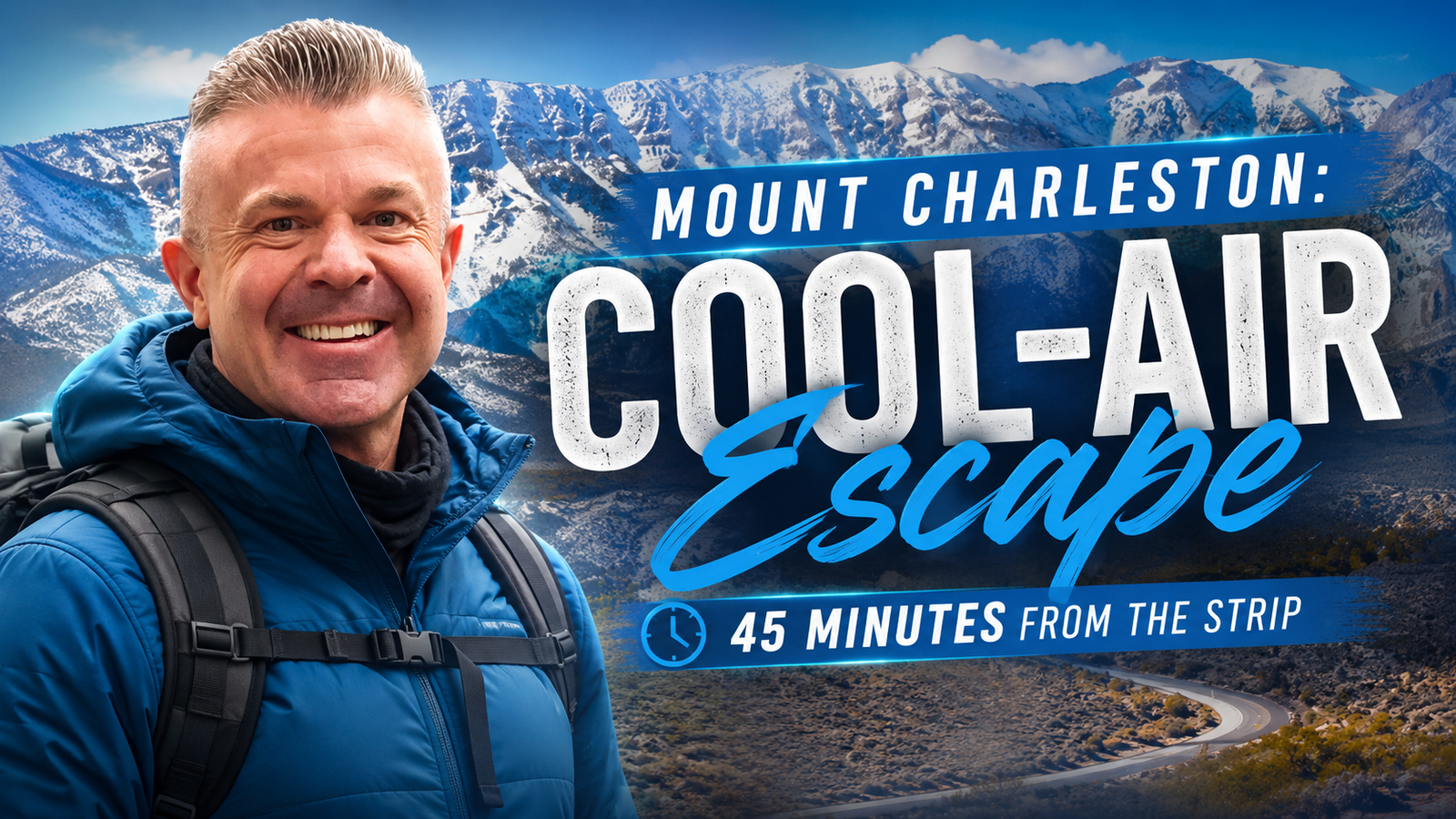
Mount Charleston: The Cool-Air Escape 45 Minutes from the Strip
On a July afternoon when Las Vegas hits 112°F on the valley floor, the summit of Mount Charleston — formally Kyle Peak, elevation 11,918 feet — is sitting in the upper 70s with a pine-scented breeze. That's not a marketing claim. The National Weather Service has documented the temperature differential at 20 to 30 degrees on typical summer days, and on record-breaking heat events, the gap can push even wider. Forty-five minutes of driving separates two completely different climates, and a staggering number of people who move to Las Vegas don't find out about it until their first brutal July.
That's the open secret Mount Charleston has kept for decades: alpine relief, practically in the backyard of one of the hottest cities on earth.
What You Actually Find Up There
The Spring Mountains National Recreation Area, managed by the U.S. Forest Service, covers more than 316,000 acres west of the valley. Drive up Kyle Canyon Road off US-95 and the saguaro gives way to piñon pine, then ponderosa, then white fir and bristlecone pine near the upper trailheads — the oldest living trees on the continent, some of them more than 3,000 years old.
The trail system is legitimate. The South Loop Trail to Charleston Peak is a 19-mile round trip gaining over 4,000 feet — a serious objective. But there are shorter options: Cathedral Rock Trail (a 2-mile round trip) rewards casual hikers with panoramic views of the valley below. Echo and Robbers Roost trails work for morning outings that have you back at the car before noon heat sets in anywhere.
At the base of Kyle Canyon sits the Mount Charleston Lodge, a fixture for valley locals since 1945. The log-cabin bar and the outdoor deck with a firepit are the destination on weekend afternoons — burgers, craft beers, and a temperature that makes you forget what month it is down below. Cabins are available for overnight stays, and during winter, Las Vegas Ski & Snowboard Resort — yes, that's a real ski hill — opens runs at Lee Canyon, roughly 30 minutes from the Lodge.
The West Side Advantage
For anyone buying or already living in Summerlin or the northwest valley, Mount Charleston isn't a road trip — it's a Tuesday. From the 215 Beltway near Summerlin, you're on US-95 northbound and turning onto Kyle Canyon Road in under 30 minutes. The same drive from Henderson's eastern edge or the southeast valley is closer to an hour.
This is one of those quality-of-life details that doesn't show up in a square footage count or a price-per-foot comparison, but it shapes how people actually experience life here. Summerlin buyers who ask about outdoor access frequently get pointed toward Red Rock Canyon first — and it deserves that attention — but Mount Charleston is the summer answer when Red Rock's black-rock surfaces are radiating heat at ground level.
The Summerlin and northwest corridor's proximity to both US-95 and the 215 means the mountains are an accessible exhale, not a production. Pack a cooler, leave at 9am, hike two hours, have lunch at the Lodge, back home by 2pm. It's a completely ordinary Saturday for a lot of valley residents.
Why It Matters Today
Las Vegas summers are getting longer and hotter — that's not speculation, it's recorded data. The valley has set new heat records in multiple recent years, and afternoon temperatures above 115°F, once unusual, are now something residents plan around. The ability to drive vertically — up 8,000 feet in elevation in less than an hour — is genuinely meaningful as a coping mechanism and a lifestyle asset.
For buyers relocating from coastal markets, especially California, the assumption is often that desert living means heat with no relief valve. Mount Charleston flips that assumption. The Spring Mountains aren't a two-day-trip destination; they're a same-day reset. That access, combined with Nevada's absence of a state income tax and the relatively lower cost of entry compared to coastal metros, reframes what desert living actually looks like at its best.
If you're evaluating neighborhoods on the valley's west or northwest side, the mountain proximity is worth factoring in the same way you'd factor a park or trail system in any other market — because up there, it's cool, quiet, and about as far from the Strip's energy as you can get without leaving the county.
Frequently Asked Questions
How much cooler is Mount Charleston than Las Vegas in summer?
On a typical summer day, temperatures at the Mount Charleston Lodge area (roughly 7,700 feet elevation) run 20 to 30 degrees cooler than the Las Vegas valley floor. When Las Vegas hits 110°F, expect upper 70s to mid-80s at the Lodge, and cooler still on upper trails above 9,000 feet.
Is Mount Charleston worth visiting in winter?
Absolutely. Las Vegas Ski & Snowboard Resort at Lee Canyon typically opens December through March, offering downhill skiing and snowboarding less than an hour from the Strip. Even without skiing, the canyon roads are scenic under snow and the Lodge stays open year-round.
Which Las Vegas neighborhoods are closest to Mount Charleston?
Summerlin and the northwest valley communities have the shortest drive — roughly 30 to 40 minutes to Kyle Canyon Road via US-95 North. Areas further east or southeast, including Henderson, add another 20 to 30 minutes to the trip each way.