
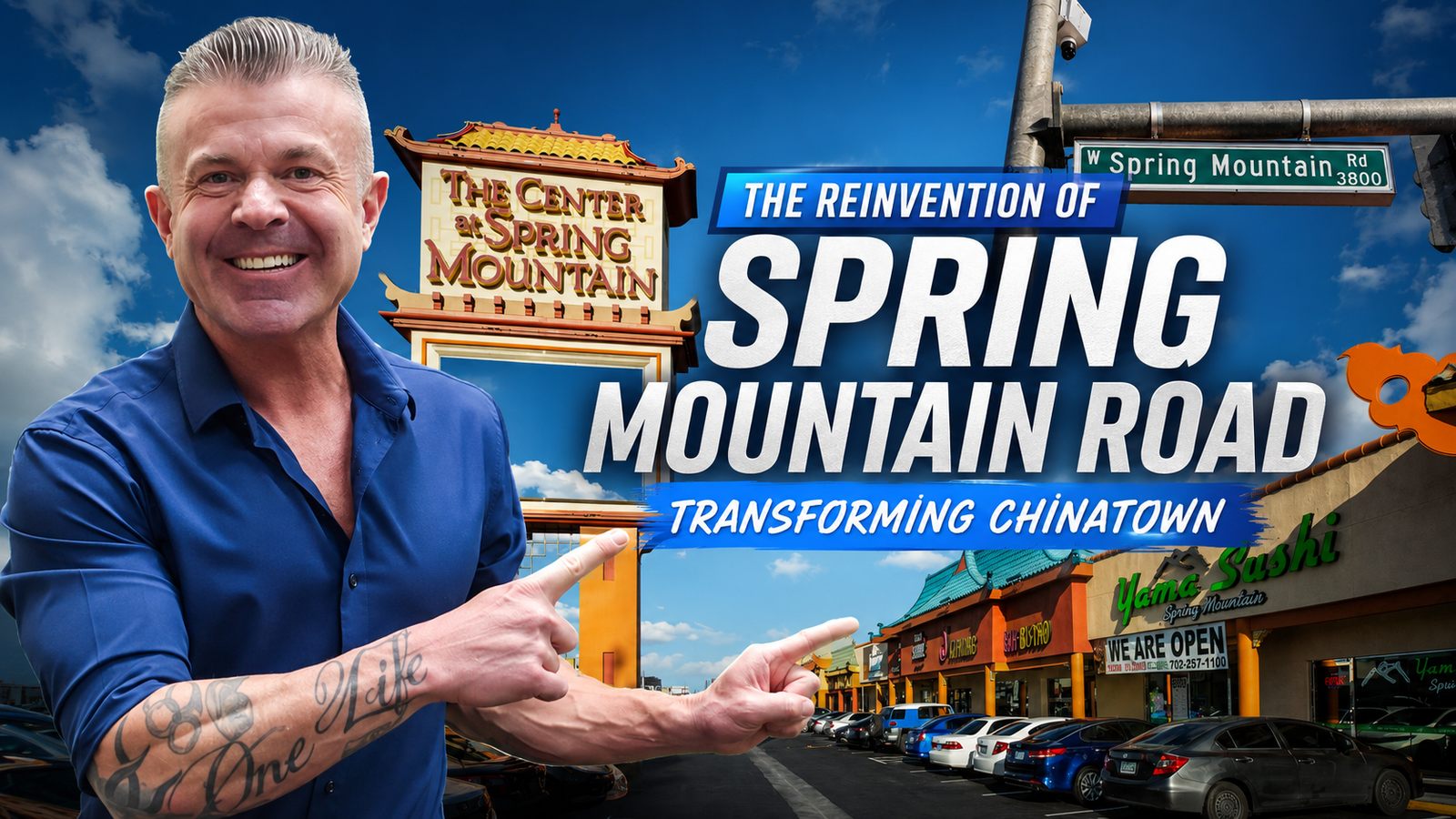
The Reinvention of Spring Mountain Road: Inside the Plan to Transform Las Vegas Chinatown
A stretch of asphalt less than three miles long has, over the past three decades, quietly become one of the most culinarily important corridors in the American Southwest — and now Clark County wants to reshape it entirely.
The Reinvention of Spring Mountain Road: Inside the Plan to Transform Las Vegas Chinatown is not just a zoning story. It's the story of how a single road became an identity, and what happens when a government plan meets a neighborhood that already works.
How Spring Mountain Road Became Las Vegas Chinatown
In the early 1990s, a shopping center called Chinatown Plaza opened at Spring Mountain Road and Wynn Road — about two miles west of the Strip. The timing was deliberate. Las Vegas was in the middle of its massive 1990s boom, and a growing population of Asian-American residents and business owners saw an underserved market in a corridor that was, at the time, mostly aging strip malls and surface parking.
Chinatown Plaza anchored the block. Restaurants, herbalists, bakeries, and specialty grocery stores followed. Within a decade, the stretch from Decatur Boulevard east toward the I-15 had transformed into what locals simply call Chinatown — even though it functions less like the traditional ethnic enclaves of San Francisco or New York and more like a pan-Asian culinary district. Vietnamese pho shops sit alongside Japanese ramen counters, Korean BBQ halls, Taiwanese bubble tea cafes, and Sichuan hot pot restaurants. On a Friday night, the parking lots are full by 7 p.m.
Today, Spring Mountain Road between Decatur and the freeway is home to dozens of independent restaurants and small businesses, anchored by Shanghai Plaza, Chinatown Mall, and several smaller plazas built in the same low-rise, plaza-courtyard format. The corridor has no single owner, no master plan, and no HOA. It grew organically — and that's part of why the new county initiative is being watched so closely.
What the Inspiring Spring Mountain Plan Actually Proposes
Clark County has launched a formal initiative called Inspiring Spring Mountain, with a dedicated website to collect community feedback and share updates. The stated goal is to support the small businesses along the corridor while improving infrastructure, walkability, and the overall physical environment.
Details at the public feedback stage are broad by design — the county is in listening mode before finalizing specifics. But the general direction points toward streetscape improvements, better pedestrian connections, possible signage and branding upgrades, and a framework that could attract new investment without displacing the independent operators who built the corridor's reputation.
That last part matters. The reinvention of Spring Mountain Road faces a tension familiar to any urban planner: how do you improve a district without pricing out the businesses that made it worth improving in the first place? Community advocates and small business owners have been vocal in public sessions, and the county's decision to lead with a feedback website before presenting a finished plan reflects an awareness of that concern.
The corridor sits in unincorporated Clark County — not within the City of Las Vegas — which means county government holds the land-use and zoning authority here. Any redevelopment will move through county channels.
Why It Matters for Property Near Spring Mountain
The reinvention of Spring Mountain Road has direct relevance for anyone who owns or is considering buying property in the surrounding neighborhoods — zip codes 89102, 89103, and 89117 in particular.
Corridor investment tends to lift adjacent residential values over time, especially when improvements are infrastructure-led: better sidewalks, lighting, street trees, and parking organization make neighborhoods more livable and more appealing to buyers. If the Inspiring Spring Mountain plan moves from public feedback into funded implementation, the blocks immediately north and south of Spring Mountain Road — a mix of older single-family homes, condos, and small multifamily properties — stand to benefit from increased commercial vitality and public investment.
For investors, it's worth noting that this corridor falls under Clark County short-term rental regulations, which are among the more restrictive in the valley. Anyone evaluating a nearby residential property as a rental play should review current county licensing requirements before running the numbers.
The Spring Mountain corridor also sits roughly 10 to 15 minutes from the Strip, close to the Las Vegas Convention Center, and within a short drive of the western edge of the valley. It's not a hidden pocket of the city — it's a highly trafficked, well-known address that has simply lacked public investment proportional to its cultural footprint.
What the county does next will be worth watching. The public comment window at inspiringspringmountain.com is open, and for residents, business owners, and property owners in the area, this is one of those moments where early input actually shapes outcomes.
Kirby Scofield and the team have worked this part of the valley for years. If you're curious what current activity looks like near the Spring Mountain corridor, we know the blocks.
Frequently Asked Questions
What is the Inspiring Spring Mountain plan?
Inspiring Spring Mountain is Clark County's redevelopment initiative for the Spring Mountain Road corridor, the stretch locally known as Las Vegas Chinatown. The county launched a website at inspiringspringmountain.com to collect community feedback and share updates on the plan, which aims to support existing small businesses while improving the corridor's infrastructure and pedestrian environment.
Does the Spring Mountain Chinatown corridor fall under City of Las Vegas or Clark County jurisdiction?
The Spring Mountain Road corridor sits in unincorporated Clark County, not within the incorporated City of Las Vegas. That means Clark County holds zoning and land-use authority over the area, and any redevelopment approvals will move through county government rather than city channels.
How could the Spring Mountain redevelopment affect nearby home values?
Corridor improvements — better streetscaping, lighting, walkability, and sustained commercial investment — have historically supported residential property values in adjacent neighborhoods. The zip codes closest to Spring Mountain Road (89102, 89103, 89117) include a mix of single-family homes, condos, and multifamily properties that could see increased buyer interest as the corridor becomes more polished and more prominently positioned.