

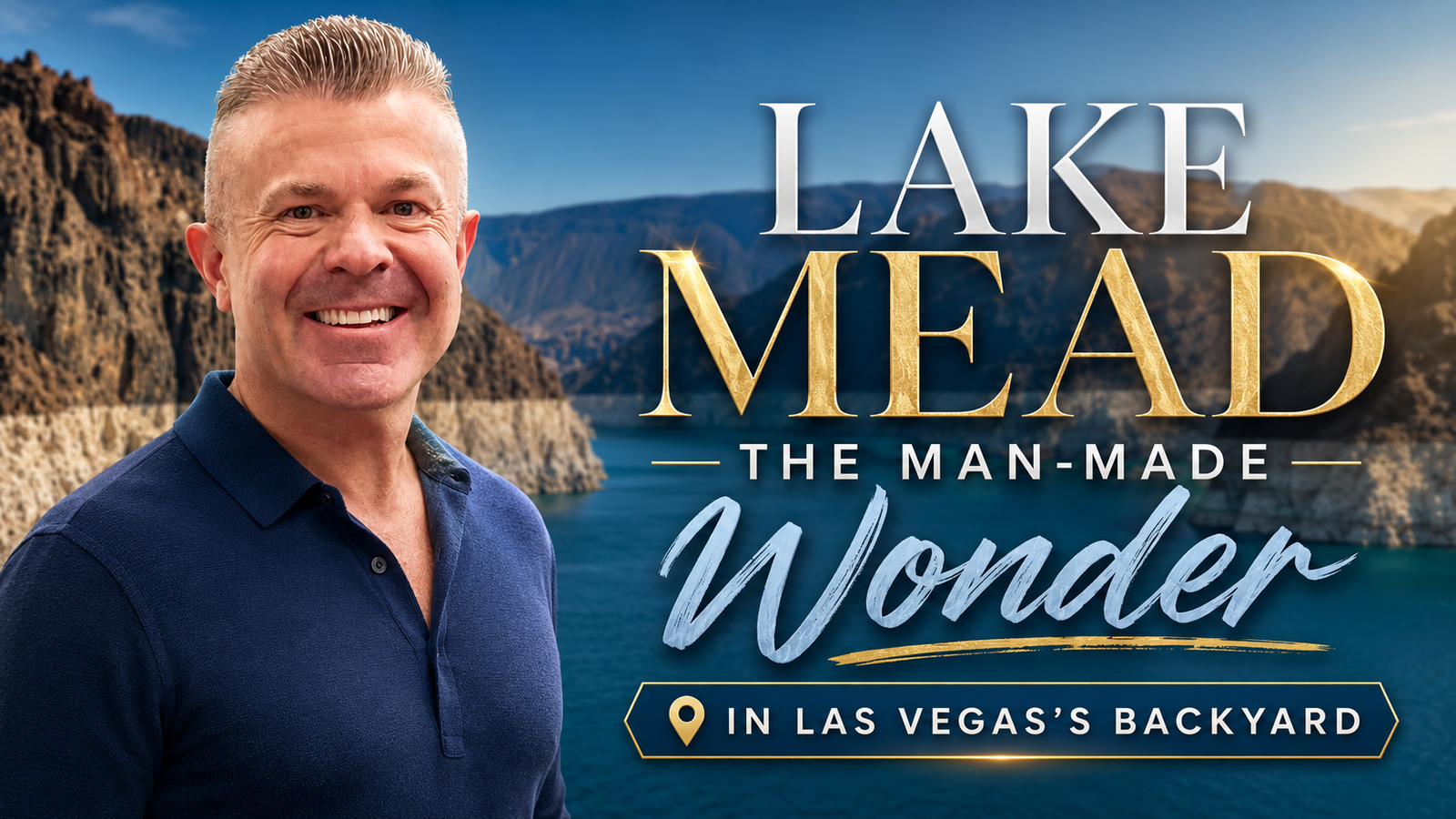
Lake Mead: The Man-Made Wonder in Las Vegas's Backyard (and How to Actually Enjoy It)
In 1935, the federal government finished pouring 4.4 million cubic yards of concrete into the Black Canyon of the Colorado River — and slowly, over the next six years, a lake the size of a small inland sea filled up behind it. Today that lake sits less than 30 miles from the Las Vegas Strip, and most people who live here have never once stood at its edge.
That's worth fixing.
Lake Mead National Recreation Area is the largest reservoir in the United States by volume when full — roughly 26.12 million acre-feet of water stretching across 247 square miles of Nevada and Arizona. It was created entirely by Hoover Dam, which at the time of its completion was the tallest dam on earth. The engineering alone is staggering: the dam stands 726 feet tall, weighs 6.6 million tons, and generates enough hydroelectric power to serve 1.3 million people. It was built during the Great Depression by a workforce that peaked at 5,251 men in a single day — working in canyon temperatures that routinely exceeded 120°F.
The lake named after Elwood Mead, the Bureau of Reclamation commissioner who oversaw the project, took until 1941 to reach full capacity. In the process, it submerged the town of St. Thomas, Nevada — a settlement of several hundred people that had existed since 1865. When water levels dropped dramatically in the early 2000s, the ruins of St. Thomas resurfaced. The old foundations, a few concrete walls, and scattered artifacts became an eerie, walk-through reminder of what lies beneath.
What Happened to the Water Level
At its peak in 1983, Lake Mead hit 1,225.44 feet above sea level — so full it was nearly spilling over the spillways. By July 2022, it had dropped to 1,040 feet, the lowest level since the reservoir first filled. That's a loss of roughly 185 vertical feet of water, visible as a stark white "bathtub ring" of mineral deposits that now bands the canyon walls for miles.
The causes are layered: a 23-year megadrought across the Colorado River Basin, increased water demand from the seven states and Mexico that draw from the river, and the compounding pressure of climate variability. At the lowest point, federal water managers declared the first-ever Tier 2 shortage on the Colorado River, triggering mandatory cuts to Nevada, Arizona, and Mexico's allocations.
Nevada actually gets the smallest allocation of any of the seven Colorado River Basin states — 300,000 acre-feet per year — but the Southern Nevada Water Authority has become one of the most aggressive water recyclers in the country, recapturing nearly 99% of all indoor water used in the Las Vegas Valley and returning it to the lake. The bathtub ring is still visible. But by early 2024, aggressive conservation measures and back-to-back wet winters in the Rockies had pushed levels back above 1,060 feet — not a recovery, but a reprieve.
For Las Vegas residents and anyone considering buying here, this is not a distant environmental story. It is the defining infrastructure question of living in Southern Nevada.
How to Actually Get Out There
The good news: Lake Mead is genuinely accessible, and most of the best spots are less than an hour from anywhere in the valley.
**Can you swim in Lake Mead?** Yes. Swimming is allowed at several designated beaches, and the water temperature in summer typically runs between 75°F and 85°F in the upper few feet — legitimately refreshing when it's 110°F on the pavement back home. The most popular swim beaches include Boulder Beach (right off US-93, about 4 miles past Hoover Dam), Calville Bay, and Las Vegas Bay (when water levels permit access).
**Getting there from Las Vegas:** Take US-93 South (Boulder Highway) toward Boulder City. The main visitor center for Lake Mead NRA is approximately 28 miles from Downtown Las Vegas. From Henderson, it's even closer — the Lakeshore Road entrance near Boulder Beach is under 25 miles from the Henderson city center.
**Entry fees:** Lake Mead NRA charges a $25 vehicle fee (valid for 7 days) or accepts the America the Beautiful annual pass.
**What else is out there:**
• Boating and kayaking from Callville Bay and Boulder Harbor marinas
• Fishing (striped bass, largemouth bass, catfish, carp) — Nevada fishing license required
• Hiking trails including the Historic Railroad Trail, a 7.5-mile round trip along the old construction rail route with dramatic dam views
• The Boulder City/Hoover Dam Museum in Boulder City, 20 minutes from the lake entrance, for the full engineering backstory
A practical note: go early. Summer mornings at the lake — before 9 a.m. — are manageable. By noon in July, shade is scarce and surfaces are scorching. Bring more water than you think you need.
Why It Matters Today
For anyone living in or relocating to the Las Vegas Valley, Lake Mead isn't just a weekend destination — it's the literal source of about 90% of Southern Nevada's drinking water. The bathtub ring you'll see on those canyon walls is a real-time water gauge for the entire region.
Buyers moving from California or other water-stressed states sometimes assume Las Vegas is reckless about water. The opposite is closer to the truth: Nevada has among the strictest per-capita water use restrictions in the West, and the Southern Nevada Water Authority's reclamation program is studied nationally as a model. New construction in the valley increasingly incorporates drought-tolerant landscaping requirements, and grass removal incentive programs have been running for years.
The lake is also a reminder of what makes living in the desert genuinely interesting. Thirty miles from the neon, there's a canyon that swallowed a town, walls that record a 20-year drought in white mineral rings, and water cold enough to stop the summer heat in its tracks. That's not nothing.
If you've been here for years and haven't made the drive — this is the summer.
Frequently Asked Questions
How far is Lake Mead from Las Vegas?
Lake Mead National Recreation Area is approximately 24–30 miles from central Las Vegas, depending on your starting point. The Boulder Beach entrance via US-93 is typically a 35–45 minute drive from the Strip under normal traffic conditions. From Henderson, the drive to the nearest lake access points is closer to 20–25 miles.
Rephrase as: 'Are there any water quality or safety advisories for Lake Mead swimming areas?' with citation to National Park Service testing data
Swimming is permitted at designated beaches including Boulder Beach, Calville Bay, and Echo Bay. The water is tested regularly by the National Park Service, and there are no widespread advisories as of recent seasons — though visitors should always check the official Lake Mead NRA site for current conditions before heading out. There are no lifeguards on duty at any beach, so swimming with a partner and staying within marked areas is strongly advised.
Why is Lake Mead's water level so low?
Lake Mead's water level dropped to historic lows between 2020 and 2022 primarily due to a sustained drought across the Colorado River Basin and increased demand from the seven U.S. states and Mexico that draw from the river. Levels have partially recovered since then, aided by strong snowpack seasons in the Rocky Mountains and mandatory conservation cuts across the region. The long-term challenge of balancing the Colorado River's supply against growing demand across the Southwest remains an active policy issue.