

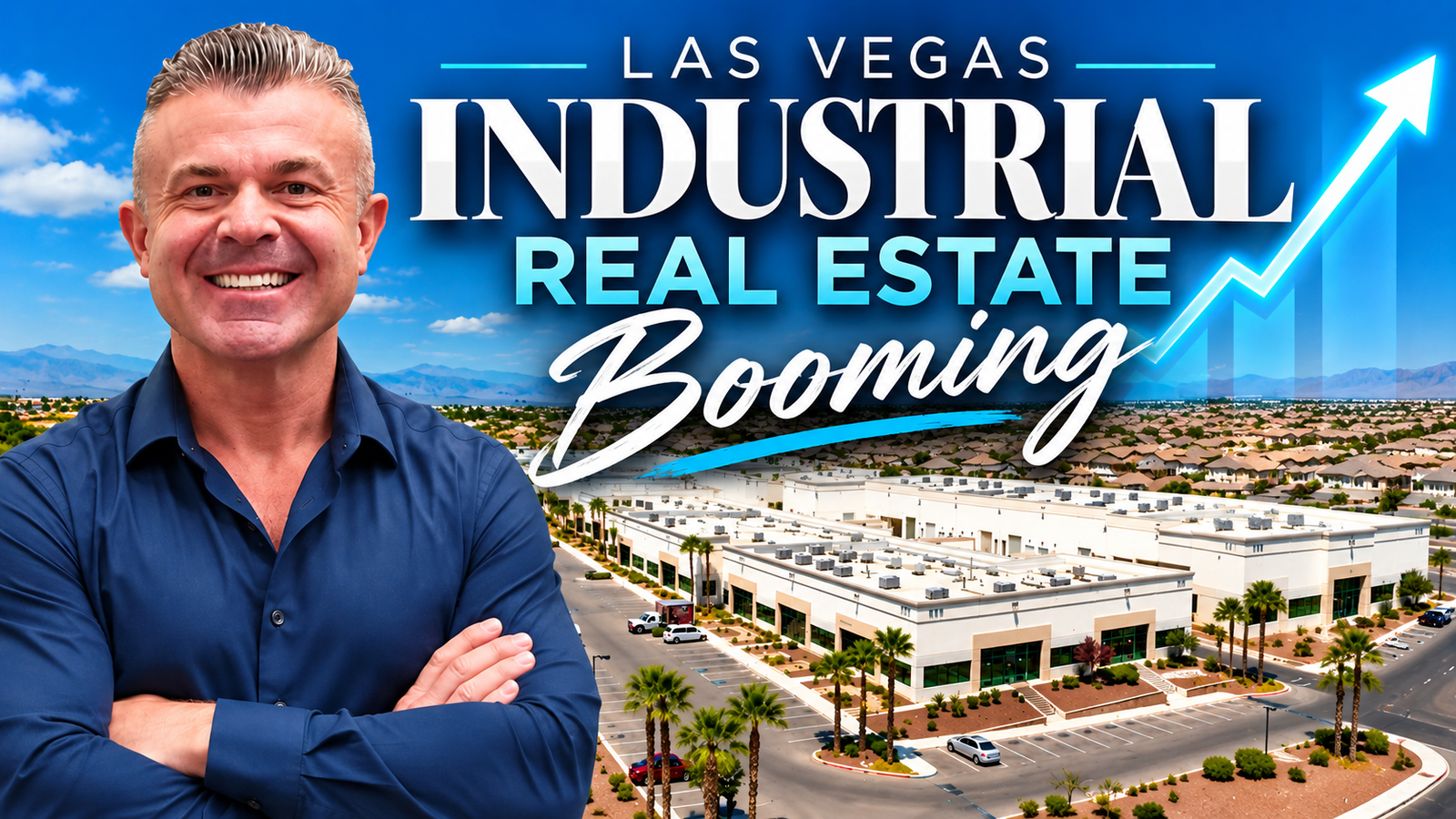
Why Las Vegas Industrial Real Estate Is Booming — And What It Means for the Local Economy
Las Vegas industrial real estate is rebounding, and the reason goes back to a supply chain lesson companies learned the hard way during the pandemic. That shift matters to anyone who owns, rents, or is thinking about buying property here.
From Just-in-Time to Just-in-Case: What Changed
For decades, big retailers and manufacturers ran lean. They ordered inventory only when they needed it, kept warehouse space tight, and put cost control ahead of resilience. COVID broke that model. Port slowdowns, shipping delays, and factory shutdowns left shelves empty nationwide.
Now companies are building what supply chain experts call "safety stock," keeping more inventory on hand to buffer against the next disruption. Ruben Ramirez, head of occupier services for the Americas Industrial & Logistics division at CBRE, put it plainly at an August panel hosted by the Southern Nevada chapter of the Commercial Real Estate Development Association (CREDA): "Disruption is the new baseline. It's not the exception anymore."
That mindset takes more space. Panelists noted that warehouses built for a just-in-case supply chain need roughly 15% to 25% more square footage to move the same volume of goods. Many companies are also spreading inventory across several regional distribution hubs instead of relying on one or two coastal centers.
Where Las Vegas Fits
Las Vegas is within a one-day truck drive of Los Angeles, Phoenix, Salt Lake City, and much of the Southwest consumer market. Compared with port-adjacent markets in Southern California, it offers lower land and operating costs, no state inventory tax, and room for large distribution facilities. Those advantages make the valley a natural candidate for a Southwest regional hub.
The market has had its growing pains. A wave of speculative construction during the pandemic outpaced demand, and industrial vacancy climbed into double digits for the first time in more than a decade. Since then, developers have slowed new groundbreakings and leasing has picked up. Vacancy was around 9% in Q2 2026, according to CBRE. North Las Vegas accounted for nearly three-quarters of the quarter's positive net absorption, the net amount of new space leased. The picture today is a market working through extra supply and steadily filling space, not a boom.
What Industrial Activity Means for Housing
Warehouses and distribution centers employ warehouse associates, logistics coordinators, drivers, and facility managers. As companies lease and fill space, those workers need places to live, and that adds to rental and for-sale demand in nearby communities.
The connection isn't one-to-one. Leasing space doesn't always mean immediate hiring, and tourism and hospitality remain the valley's largest employers. Still, industrial activity helps diversify the local economy, and it's one useful signal among several for anyone watching where housing demand may head.
For deeper context on the panel discussion, see CREDA's recap of the event.
What This Means For You
• Industrial activity is concentrated in North Las Vegas, the Apex area, and along the I-15 corridor. Workers at those facilities add to housing demand in nearby neighborhoods.
• Industrial jobs help diversify an economy that relies heavily on tourism, which can make local employment less sensitive to swings in visitor traffic.
• Investors looking at rentals near established industrial zones can watch leasing trends there as one indicator of tenant demand.
• If you own a home near a major employment corridor, knowing your current value helps you plan your next move. Find out what your home is worth →
The valley's industrial market is one of the economic signals worth watching right now. Whether you own here, rent here, or are thinking about buying, knowing what's driving job creation helps you read the housing market more clearly.
Frequently Asked Questions
Why is Las Vegas attractive for industrial real estate?
Las Vegas sits at the center of a Southwest distribution network, within a day's drive of tens of millions of consumers. Nevada has no state inventory tax, and land and operating costs are lower than in Southern California. Both make the valley competitive for companies that want a regional hub.
How does industrial real estate growth affect home prices in Las Vegas?
Industrial expansion can bring jobs, and new workers need housing. That can support rental demand and home values in surrounding communities over time. It's one factor among many, alongside interest rates, inventory, and the broader economy.
Should Las Vegas homeowners care about commercial real estate trends?
Yes. Commercial and residential real estate are connected through the job market. Tracking what companies are building and leasing in the valley gives homeowners and buyers more context on where demand may head.
Source: vegasinc.lasvegassun.com
Related reading
• A Las Vegas Company Just Made the Inc. 5000 — And It's Built on Tax Liens. Here's What That Tells Us
• The Real Cost of Moving From Las Vegas — What Nobody Tells You Before You Go
• Fall Festivals 2026 in Las Vegas: What's Coming to Summerlin, Henderson, and Beyond