

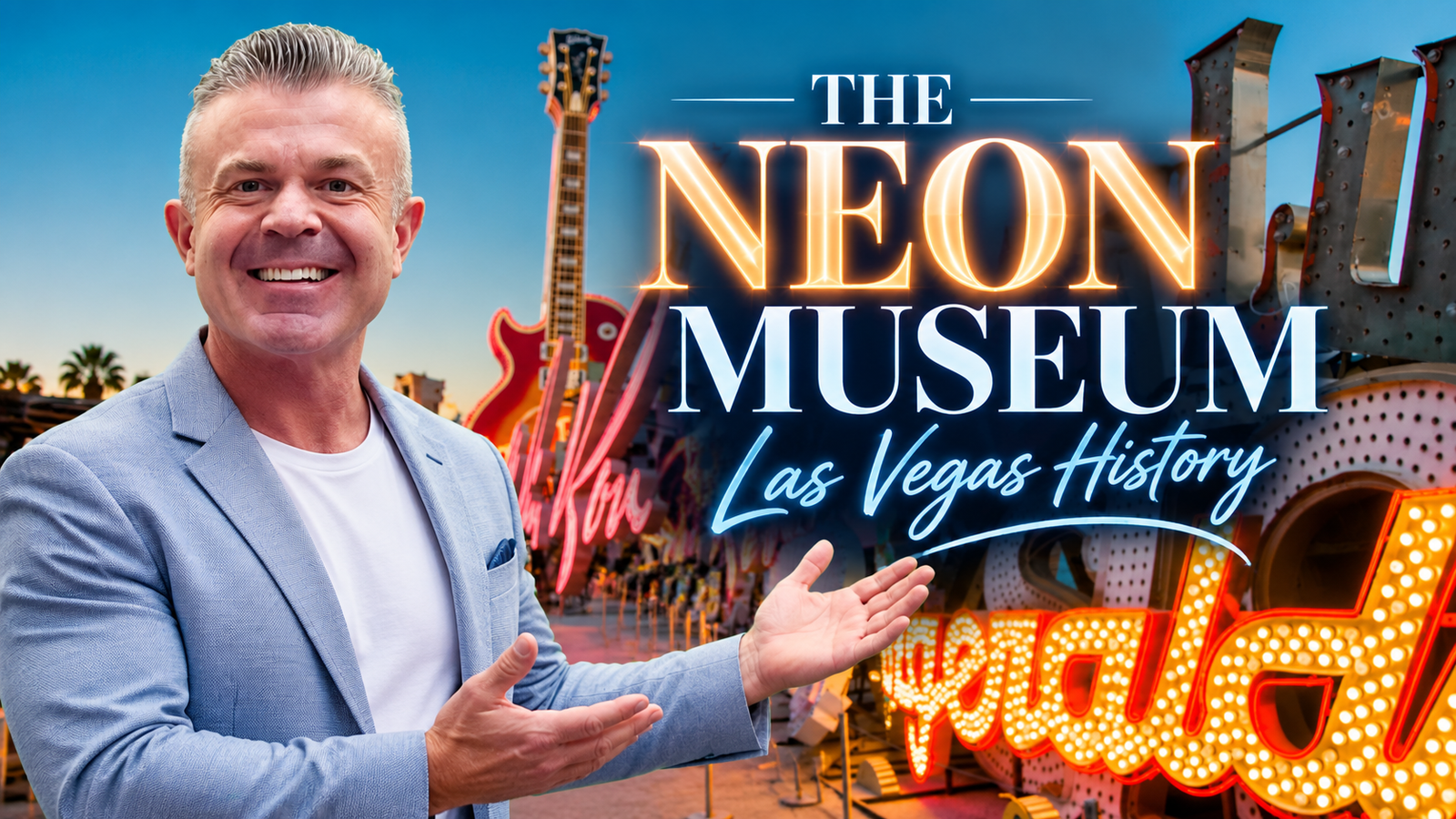
The Neon Museum: How Las Vegas Saves Its Own Story, One Sign at a Time
In 1996, a crew of preservationists dragged a rusted, hand-painted horse-and-rider sign from the old Hacienda Hotel out of a storage yard and set it up at the corner of Fremont Street and Las Vegas Boulevard. It was the first official piece of what would become The Neon Museum — and at the time, most people in town had no idea anything was being saved.
That moment planted the seed for one of the most honest cultural institutions in the American West. The Neon Museum: How Las Vegas Saves Its Own Story, One Sign at a Time is exactly what it sounds like. Broken letters, oxidized steel frames, chipped porcelain, faded paint — and behind every one of them, a place that used to exist on a skyline that most of the city has already forgotten.
What the Boneyard Actually Is
The collection lives on a two-acre lot at 770 Las Vegas Boulevard North, tucked behind a historic entrance lobby that once served the old La Concha Motel on the Strip. That lobby itself is worth a stop. Designed by Paul Revere Williams in 1961, the shell-shaped concrete structure was dismantled from its original site in 2006 and moved piece by piece to its current home.
Outside in the Boneyard, more than 200 signs stand, lean, and rest in various states of repair. Some are enormous. The old Stardust sign runs over 190 feet long. The Silver Slipper — a massive revolving slipper once mounted above a casino that Howard Hughes reportedly watched from his Desert Inn penthouse — sits weathered and tilted, its neon tubes long dark. The Moulin Rouge sign stands there too, from the first racially integrated casino in Las Vegas, which opened in 1955 and closed within months under circumstances historians still debate.
These are not decorations. They are documents.
How the Signs Ended Up Here
For most of Las Vegas history, old casino signs went one of three places: the landfill, the scrap yard, or storage lots where they slowly fell apart. The city had no formal mechanism for saving them. When a property got demolished or rebranded, the sign came down and that was usually the end of it.
Young Electric Sign Company, which fabricated many of the most recognizable signs on the Strip, started holding onto decommissioned pieces in the 1970s rather than scrapping them. That informal collection eventually became the foundation for what the Neon Museum would formalize decades later.
The museum incorporated as a nonprofit in 1996. It took more than a decade of fundraising, negotiating, and acquiring pieces before the Boneyard opened to the public in 2012. Since then, the collection has grown steadily, and a restoration program has brought several signs back to working condition for a separately ticketed nighttime experience called Brilliant.
Why Las Vegas Residents Should Make the Trip
A lot of long-time locals have driven past the museum on Las Vegas Boulevard North for years without stopping. That's a mistake worth correcting.
The Neon Museum: How Las Vegas Saves Its Own Story, One Sign at a Time captures something that a trip down the current Strip cannot. The signs out in the Boneyard represent the physical evidence of a city that remade itself so aggressively and so often that almost nothing from its first 50 years of casino culture survived in place. The Sands. The Dunes. The Desert Inn. The Aladdin. All gone. Their signs, or pieces of them, are here.
For anyone who remembers those places, a walk through the Boneyard is something close to archaeology. For anyone who moved here after the demolition wave of the 1990s and 2000s, it fills in a chapter that the current skyline cannot tell.
Understanding what the city was helps explain what it is. That matters in a place that gets defined by its newest hotel and newest stadium. The older history does not go away. Someone just has to keep it.
If you want more local history and neighborhood context across Downtown Las Vegas and the broader valley, the Scofield Group blog covers it regularly.
Frequently Asked Questions
What are the Neon Museum's hours and ticket prices?
Hours and pricing change seasonally, so checking the museum's official website before you visit is worth your time. As of 2024, daytime tours of the Boneyard run at scheduled intervals, and the Brilliant nighttime experience requires a separate ticket purchased in advance.
Can you visit the Neon Museum without a guided tour?
Most Boneyard access is through guided tours, which run roughly 45 minutes to an hour. The guides add real context about individual signs and the properties they came from, so the tour format works better than self-paced wandering would for a collection this dense.
How many signs does the Neon Museum have in its collection?
The museum holds more than 200 signs in the outdoor Boneyard, with additional pieces in storage and several fully restored signs displayed in the La Concha Lobby and around the property. The collection grows as signs become available from demolitions and donations across the valley.
Related reading
• The Forever 1 Memorial: How Las Vegas Is Building a Permanent Tribute to October 1
• The Story Behind Sun City Anthem: How Del Webb Built Henderson's Largest 55+ Community