

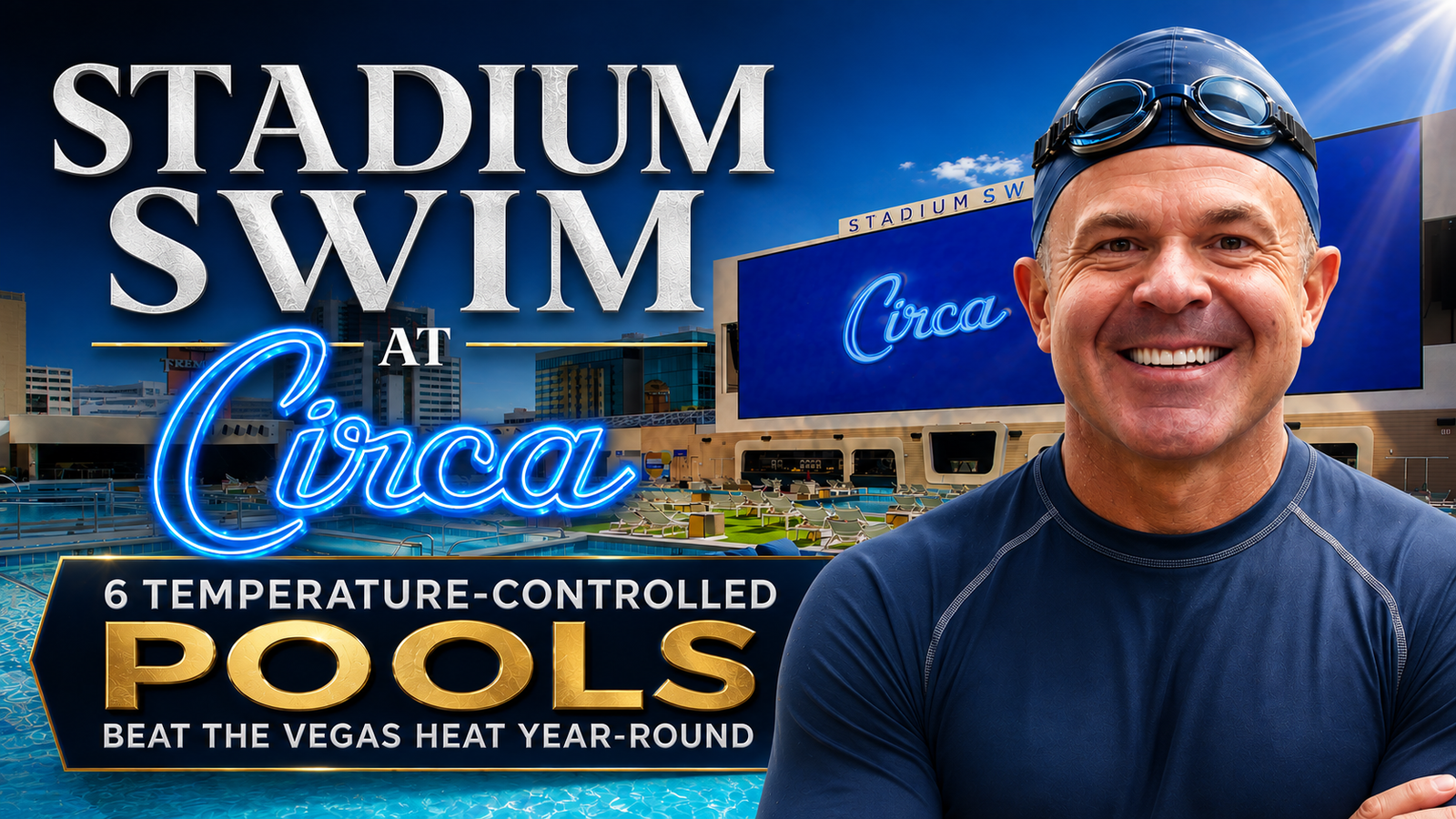
Stadium Swim at Circa: How Six Temperature-Controlled Pools Beat the Vegas Heat Year-Round
Six pools. A 143-foot screen. And not a single one of those pools hitting 110 degrees when the asphalt outside could fry an egg.
That's the short version of what Circa Resort & Casino pulled off when it opened Stadium Swim in October 2020 — right in the middle of a pandemic, in one of the hottest cities on the planet, with a pool amphitheater that has since become one of the most-talked-about attractions in Las Vegas. Whether you've lived here twenty years or moved from California six months ago, Stadium Swim at Circa is the kind of place that makes you stop and think: *how did they actually build this?*
What Stadium Swim at Circa Actually Is
Stadium Swim sits on a nine-story platform above Fremont Street — not on the Strip, which is the first thing that surprises most people. Circa went all-in on Downtown Las Vegas at a time when a lot of developers were still hedging, and the pool complex is a big reason the bet is paying off.
The centerpiece is a 143-foot-wide screen — roughly the width of a 14-story building laid on its side — that broadcasts sports, concerts, and events 24 hours a day. Around it, six pools are arranged in a cascading amphitheater layout so that nearly every seat in the water has a sightline to the screen. It holds up to 4,000 people. There's a full bar, a food operation, and cabanas that book out weeks in advance on game days.
But the engineering story is the one worth telling.
How Six Pools Stay Comfortable When It's 110 Outside
Las Vegas summers are genuinely brutal. June through September, daytime highs regularly crack 110°F, and standing water in an uncovered pool can warm to bathwater temperatures — sometimes past 90°F — within hours of sunrise. That's not refreshing. That's a hot tub.
Circa's solution is a chilled-water system that actively cools all six pools to a consistent, comfortable temperature regardless of ambient air heat. The system runs continuously, cycling water through chillers and back into the pools to hold the target range — typically somewhere in the mid-to-upper 70s Fahrenheit — even at peak afternoon heat. It's the same class of mechanical engineering you'd find in a large commercial HVAC system, just applied to water instead of air.
The pools are also tiered and partially shaded by the surrounding structure, which reduces direct solar gain. On the hottest days, that combination of shade and active cooling is the difference between a pool people actually want to be in and one they avoid until sundown.
This is how Vegas operates at its best: it doesn't retreat from the desert. It engineers around it.
Why Locals Have Claimed It (Not Just Tourists)
When Stadium Swim opened, the assumption was that it would skew heavily toward out-of-towners — a novelty attraction with a great Instagram angle. What actually happened is that Las Vegas locals started buying season passes and showing up on Tuesday afternoons to watch a baseball game from a pool chair.
Circa is 21-and-over only, which keeps the atmosphere consistent with what the property is going for. Day passes run roughly $30–$50 depending on the day and season, with significant discounts for Nevada residents. Cabana and daybed rentals go higher, especially for NFL Sundays or major boxing events, when Stadium Swim essentially becomes the most unusual sports bar in America.
For locals, it scratches an itch that's genuinely hard to scratch in the desert summer: being outside without suffering. The combination of cool water, a massive screen, and a full bar in the middle of the afternoon on a 108-degree day is not something you find anywhere else. It's become part of how a segment of Las Vegas residents actually spends their summers — not hiding from the heat, but sitting in a chilled pool watching a game.
Why It Matters Today
For anyone thinking about what life in Las Vegas actually looks like — especially people relocating from places where summer means outdoor festivals and patios — Stadium Swim is a useful example. The valley has engineered its way around the heat in ways that are easy to miss if you're only visiting in December.
The Downtown Las Vegas corridor, anchored by properties like Circa, has also seen real reinvestment over the past five years. That matters to homeowners and buyers paying attention to where the momentum is. The Fremont Street area isn't the Strip, but it's not stagnant either — it's a district that's actively being rebuilt, and Stadium Swim is one of the clearest proof points.
If you're curious about what living in the Las Vegas valley actually looks like across different neighborhoods — from Downtown to the master-planned communities in Henderson and beyond — our team has spent years helping people figure that out. Kirby Scofield and the team know this valley in a way that only comes from selling thousands of homes across it.
Frequently Asked Questions
Is Stadium Swim open year-round?
Yes — Stadium Swim operates year-round, which is part of what makes the temperature-control system so notable. In winter months, the pools are heated rather than chilled, keeping the water comfortable when overnight lows dip into the 40s. The 143-foot screen broadcasts events regardless of season.
Do Las Vegas locals get a discount at Stadium Swim?
Circa offers Nevada resident pricing on day passes, which is typically lower than standard admission. Rates vary by day and season, with the highest prices on major NFL game days and championship events. It's worth checking Circa's official site directly for current Nevada resident rates before visiting.
Is Stadium Swim only for hotel guests?
No — Stadium Swim is open to the public with a day pass purchase, not just guests staying at Circa Resort. The property is 21-and-over only. Cabanas and daybeds can be reserved in advance, which is worth doing if you're planning around a specific game or event.