
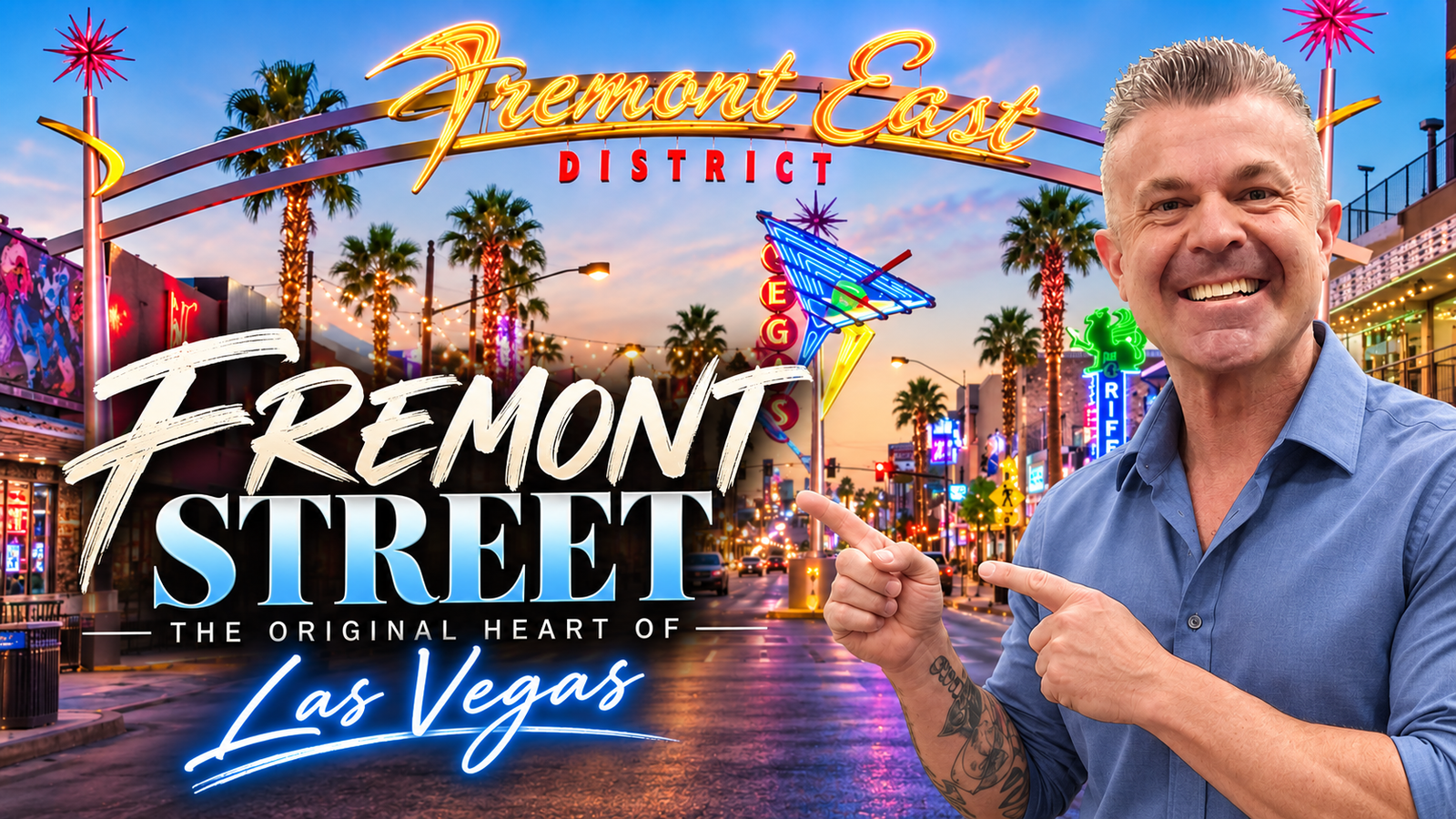
How Fremont Street Became the Original Heart of Las Vegas — and Reinvented Itself Twice
On May 15, 1905, a railroad auctioned off 1,200 lots in the Nevada desert and a town was born in a single afternoon. The street running through the middle of that new town was Fremont Street. Everything that became Las Vegas started right there.
Fremont Street Las Vegas history spans more than a century of boom, collapse, and comeback. Understanding that arc matters right now, because downtown is in the middle of its third major reinvention — and history gives you the clearest read on what comes next.
The Street That Started Everything
Senator William Clark bought an 1,800-acre ranch in 1902 to use as a railroad stop on a line he was building between Salt Lake City and Los Angeles. Three years later, his railroad company auctioned the townsite lots. Buyers paid cash on the spot. By sundown, Las Vegas existed on paper and on the ground.
Fremont Street ran directly from that first train depot into the heart of the new town. It became the commercial spine of Las Vegas before Las Vegas had much of anything else. In 1925, it was the first street in the city to be paved. In 1931, it got the first traffic signal in Las Vegas. That same year, Nevada legalized gambling, and Fremont Street was ready.
Neon signs started appearing on Fremont's clubs and casinos as early as the 1930s, and by the time the cowboy sign Vegas Vic went up in 1951, they packed the block so tightly overhead that it glowed from a mile away — earning the street a nickname that stuck: Glitter Gulch. The El Cortez opened in 1941. Binion's Horseshoe followed in 1951. The Golden Nugget had been there since 1946. These were serious casinos drawing serious gamblers, and Fremont Street was the address that mattered.
When the Strip Changed Everything
The highway that once funneled traffic through downtown eventually let drivers skip it entirely. As US 91 — what we now call Las Vegas Boulevard — became faster and more direct, developers noticed the open land south of downtown and started building there instead.
The Flamingo opened on the Strip in 1946. The Desert Inn came in 1950. Through the 1950s and 1960s, the Strip added resort hotels with pools, showrooms, and parking lots sized for the car culture that was taking over America. Fremont Street's casinos were older, smaller, and harder to reach. The tourist dollars started migrating south.
By the 1980s, downtown Las Vegas was struggling. The casinos still operated, but the energy had shifted. Vacancy spread. The city that had started on Fremont Street watched its founding block fall behind.
The Canopy That Saved Downtown
In 1994, the city of Las Vegas approved a $70 million project that was audacious enough that a lot of people thought it would fail. The plan was to close five blocks of Fremont Street to vehicle traffic, build a roughly 1,500-foot covered pedestrian mall, and hang a massive LED display canopy over the whole thing.
The Fremont Street Experience opened in December 1995. The canopy covered roughly 90 feet overhead and ran light shows synchronized to music. Nothing like it existed anywhere. Tourists came back. The casinos saw traffic increase. Property values in the surrounding blocks responded.
That first reinvention worked because it created something new rather than trying to recreate what was already gone. The street stopped competing with the Strip on the Strip's terms and became its own destination.
Why It Still Matters Today
Fremont Street Las Vegas history is not nostalgia. It's a pattern with real implications for people buying, owning, or investing near downtown right now.
The area is moving through its third major cycle. The 18b Arts District drew independent businesses and creative tenants starting in the 2000s. The Container Park opened in 2013. Developers have added new residential projects, and investors have been acquiring older commercial buildings for repositioning. The same dynamics that preceded the 1995 canopy project — concentrated investment, anchor projects, shifting foot traffic patterns — are visible again in today's downtown corridor.
This is the street that was paved first, lit first, gambled on first, and written off more than once. It has a track record of coming back. Locals who understand that context can read the current development cycle with clearer eyes than anyone working only from today's headlines.
For more on what's happening across the valley right now, browse the Las Vegas real estate blog.
Frequently Asked Questions
What is the oldest casino still operating on Fremont Street?
The El Cortez Hotel and Casino, which opened in 1941, is widely recognized as the oldest continuously operating casino in Las Vegas. It still stands at Fremont Street and Sixth Street and has been on the National Register of Historic Places since 2013.
When did Fremont Street become a pedestrian mall?
The Fremont Street Experience pedestrian mall opened in December 1995 after the city of Las Vegas approved the $70 million project in 1994. The project closed five blocks of the street to cars and added the LED canopy overhead that still runs light shows today.
Why did Fremont Street lose business to the Las Vegas Strip?
Highway improvements through the mid-twentieth century made it easier for travelers to bypass downtown entirely and drive directly to the Strip. Resort hotels built along Las Vegas Boulevard in the 1950s and 1960s offered larger facilities and more parking, drawing tourists away from the older, smaller casinos on Fremont Street.
Related reading
• The Neon Museum: How Las Vegas Saves Its Own Story, One Sign at a Time
• The Forever 1 Memorial: How Las Vegas Is Building a Permanent Tribute to October 1
• The Story Behind Sun City Anthem: How Del Webb Built Henderson's Largest 55+ Community